Site PlanningTopographic Surveys: Mapping the Land Before You Build
Site Planning2/7/2023
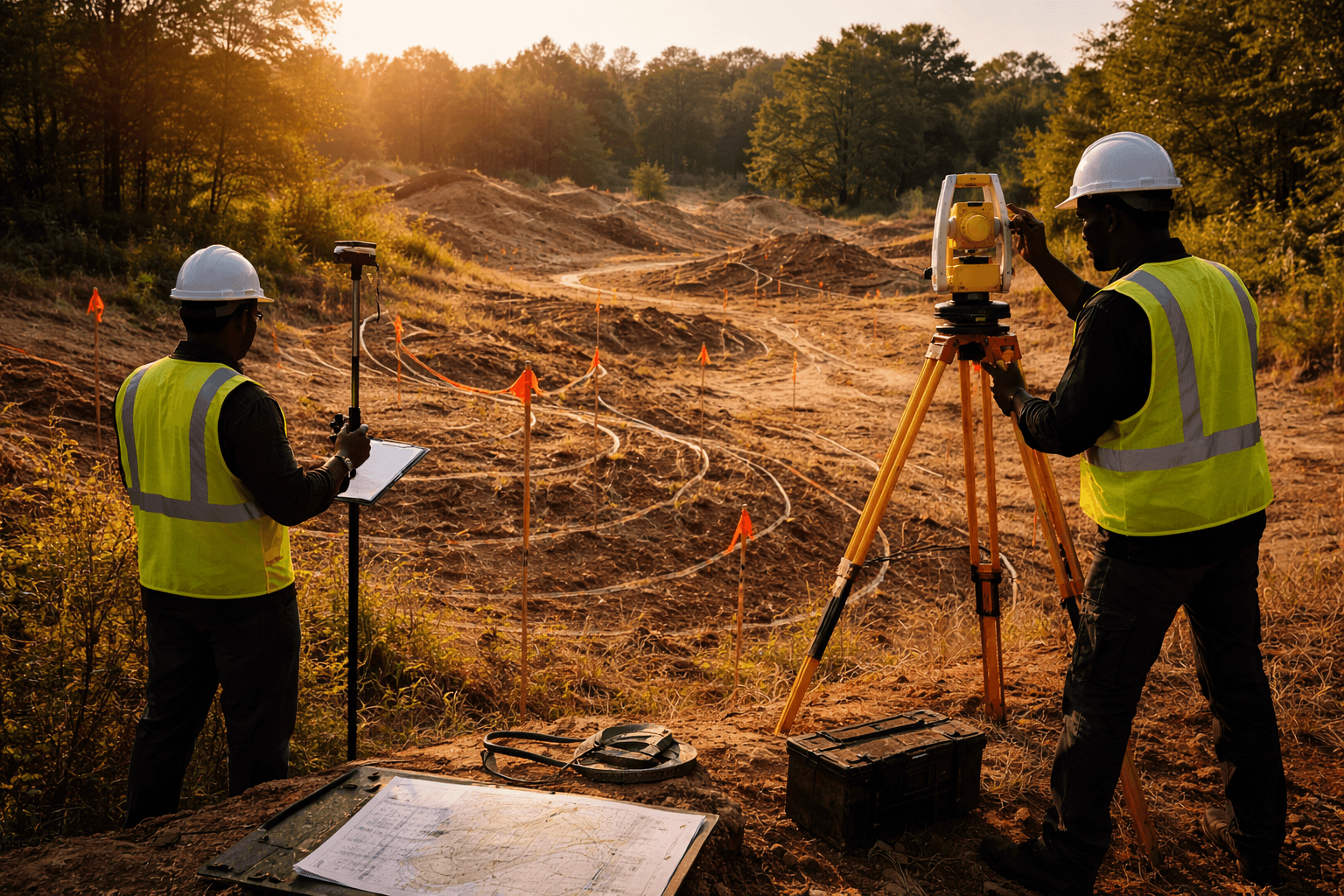
Topographic Surveys: Mapping the Land Before You Build Before any design or construction begins, it is essential to understand how the land behaves. A topographic survey captures the three-dimensional shape of a site, documenting elevations, slopes, and surface features. This information drives nearly every design decision that follows. A typical topographic survey records ground elevations, contour lines, slopes, drainage patterns, existing structures, trees, utilities, and surface features. Engineers and architects rely on this data to design foundations, drainage systems, and access routes. Designing without accurate topography introduces guesswork and can lead to drainage failures, flooding, excessive grading costs, redesigns, and delays. Accurate surveys minimize uncertainty and reduce project risk. Most municipalities require topographic data for site plans, grading permits, and stormwater approvals, and inaccurate surveys often lead to costly resubmissions. Modern topographic surveys may incorporate GNSS, total stations, drones, and LiDAR to capture dense and accurate data efficiently. Topographic surveys turn land into actionable information and are essential for building, design, and development.