SurveyingWhy Land Surveys Are the Foundation of Property Ownership
Surveying2/9/2026
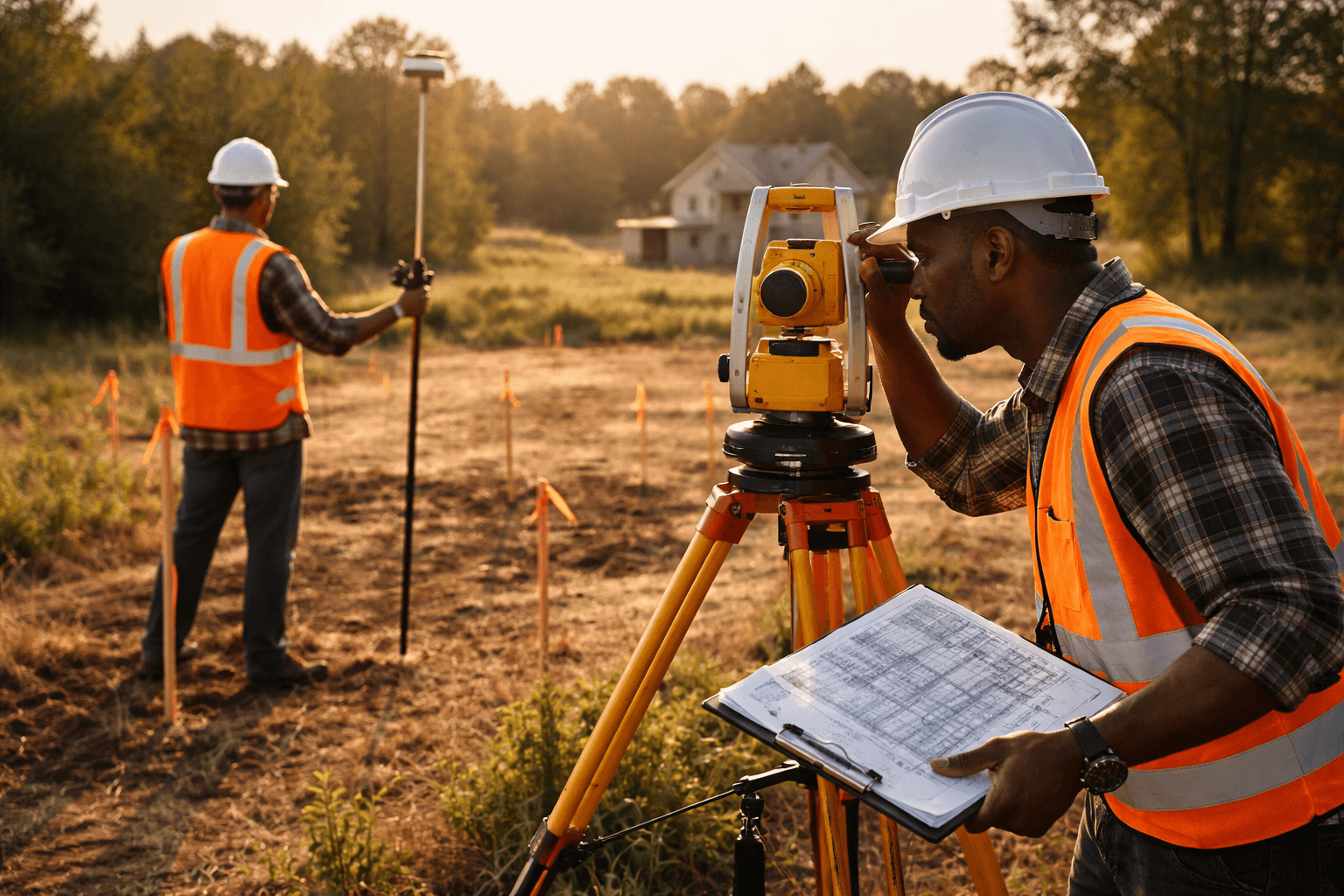
Why Land Surveys Are the Foundation of Property Ownership Property ownership is not just about possession. It is about definition. Without clearly defined boundaries, ownership becomes ambiguous, and ambiguity creates risk. This is where professional land surveying plays a foundational role. A land survey establishes the legal extent of a property by translating written descriptions in deeds into measurable, physical reality on the ground. Surveyors analyze historical records, plats, deeds, and physical monuments to determine where ownership begins and ends. Many property owners assume boundaries are visible through fences, tree lines, or roads. In reality, these features are often placed for convenience rather than accuracy. Over time, markers shift, natural features change, and informal agreements are forgotten. Surveying replaces assumption with evidence. A professional survey carries legal authority and is relied upon by courts, municipalities, lenders, and title companies to resolve disputes, approve developments, and insure property transactions. Only licensed surveyors are qualified to render boundary opinions with legal standing. Without a current survey, property owners may unknowingly build across boundary lines, encroach on neighboring land, violate zoning setbacks, or lose access rights. These issues often surface during sales, development, or disputes when resolution is most expensive. A survey protects both current and future owners by providing a documented and defensible record of land ownership that endures over time. Land surveys are not an optional formality. They are the framework that turns land into property and ownership into certainty.